What ‘Minimalist’ Really Means on a Bikepacking Trip
Packing for a bikepacking trip can be overwhelming. People throw around terms like minimalist, earn it’s weight, and many more. But how can i know if something has earned its weight? Or how do i know if i have kept my packing minimalist?
This will guide through all those thoughts, for your first bikepacking tour. Generally, i believe people have a strong tendency to overpack! In my opinion, there is no worse feeling than coming home from a 4 day trip, only to realize you have been carrying 1,2kg too much!
So, i will guide you through the major categories, and tell you what has earned it’s weight in my essential bikepacking kit!
My Minimalist Bikepacking Packing List (By Category)
Clothing I Actually Ride and Sleep In
When I packed for my first trip, I thought I needed “options.” A few shirts. A fleece. Camp pants. A spare riding kit. You know — just in case. What I ended up using? Almost none of it.
Here’s what I’ve actually ridden and slept in — on multi-day trips, in various conditions — and what’s earned its weight.
On the bike:
- 1 merino t-shirt or jersey
Dries quick, doesn’t smell, and works off-bike too. Short or long sleeve depends on the forecast. - 1 pair of padded bib shorts or liners
Comfort matters. I only bring one, and if it’s a longer trip, I’ll rinse it and let it dry overnight. - 1 pair of lightweight socks
I ride in them. I sleep in them. That’s it. - 1 wind- and rain-resistant shell
Always. Even in summer. Packs tiny, saves you when the weather flips. - Optional: Buff / neck gaiter
Useful for sun, cold, or gross collars.
Off the bike / sleeping:
- 1 pair of long base layer pants (merino or synthetic)
Sleep comfort, emergency insulation, and post-ride campwear. - 1 long-sleeve base layer or thin fleece
Doubles as pillow stuffing, ride layer if cold, and sleep shirt. - 1 pair of ultra-light shoes or sandals
Optional. Depends on terrain and how much walking I plan to do.
I don’t pack extra “outfits.” My off-bike setup is basically my sleep system. If it rains for three days straight and everything is soaked, I’ll suffer and learn. But 99% of the time, this works — and it weighs almost nothing.
Bottom line: You can ride in less than you think. You can sleep in less than you think. And no, you don’t need “camp pants.”
Sleep System That Fits in One Drybag
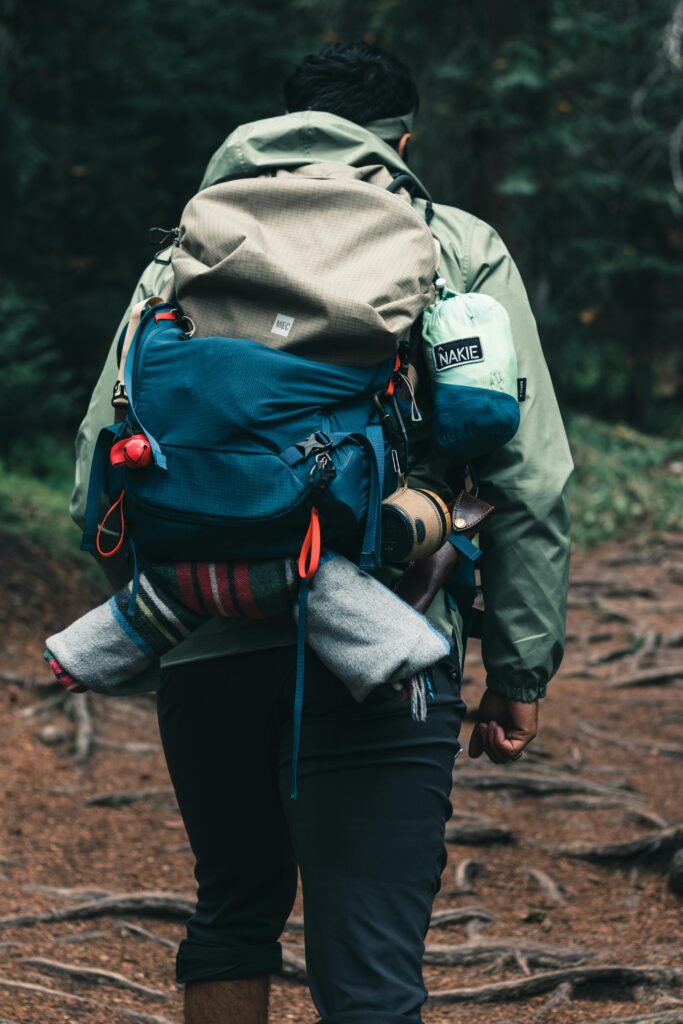
Sleep gear can be a black hole. You start out trying to pack light, and suddenly you’re stuffing a 3-season mummy bag, a thick inflatable mat, a pillow, maybe even a liner. Before you know it, half your seatpack is gone and you haven’t even packed clothes yet.
I’ve tried too much. Bulky sleeping bags that took forever to stuff down. Mats that weighed too much. And I’ve slept cold more than once.
What actually works for me now is simple:
• One sleeping bag or quilt, depending on weather. I go for something light and compressible. If the temps drop, I sleep in my layers.
• One sleeping pad. Not the thickest, not the lightest. Just something small that insulates well and gets me through the night.
• No pillow. I use spare clothes in a stuff sack. Every time I’ve brought a real pillow, I’ve regretted it.
• Optional liner, if I know it’s going to be gross or dusty. Most of the time I skip it.
The whole thing fits in one drybag. Medium size. If it doesn’t fit in that bag, I leave something behind. That’s the rule.
It’s not luxury, but I sleep warm, it doesn’t weigh much, and it never gets in the way on the bike. That’s what matters.
Also read the article below, to find out what to avoid packing!
Cook Kit: What I Bring (And What I Leave Behind)
Cooking on a bikepacking trip sounds romantic. Hot coffee with a sunrise. Pasta under the stars. But here’s the truth: when I’m tired, wet, or just done with the day, I don’t feel like cooking. I want food fast, clean, and with zero hassle.
I’ve done the full setup. Two pots, windscreen, gas canister, full cutlery, even oil and seasoning. It took up space, it made a mess, and most of it went unused.
Now I keep it minimal:
• One small titanium pot. Big enough to boil water, small enough to pack into itself.
• One long-handled spoon. That’s it. No fork, no knife.
• Small alcohol stove or tiny gas burner, depending on the trip.
• One lighter. Sometimes a backup, but I’ve never needed it.
• Small sponge and a tiny drop bottle of soap. Only for longer trips.
• Food that needs no real cooking. Instant oats, couscous, ramen, peanut butter, dried fruit, coffee sachets.
No cutting board. No frying pan. No gourmet ambitions. If I really want a warm meal, this setup can do it. If not, I can survive just fine on cold food and café stops.
I’d rather ride light and eat simple than carry a kitchen I’ll never use.
Tools & Spares I Always Pack
This is the category where it’s easy to panic. What if something breaks? What if I get stranded? What if I need to rebuild my entire drivetrain in the middle of a field?
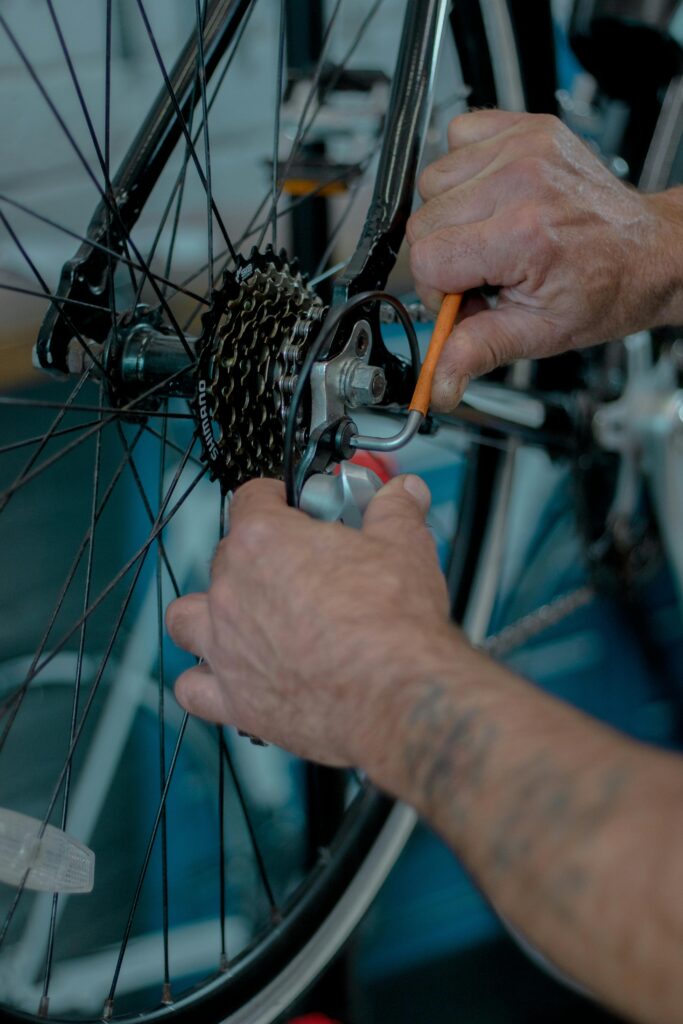
I used to overpack tools. Chain tool, cable spares, full-size multitool, chain lube, spoke wrench, even a spare derailleur hanger. Most of it never left the bag. Now I carry only what I’ve actually needed on trips.
Here’s what earns its weight for me:
• One compact multitool. Needs to have the basics: hex keys, Phillips, and ideally a chain breaker.
• Two tire levers. I’ve never needed more.
• One spare tube, even if I’m tubeless. Just in case.
• Mini pump. No CO2. Pumps don’t run out.
• Chain quick link. Takes no space, but can save your ride.
• A few zip ties and a short strip of duct tape wrapped around the pump. Fixes everything.
• Small rag or piece of cloth. Wipes hands, chains, or grease.
That’s it. No chain lube unless it’s a long or wet trip. No full toolkit. If something major breaks, I deal with it when I get to a town. I’m not running a repair shop out of my saddlebag.
Just bring the stuff that keeps you rolling. Nothing more.
Electronics That Earn Their Weight
It’s easy to go overboard here. I’ve seen people pack solar panels, two power banks, action cameras, mounts, chargers, headlamps, the whole deal. I’ve done it too. Most of it ended up being dead weight I never touched.
Now I only bring what I actually use. Stuff that keeps me moving, helps me navigate, and doesn’t get in the way.
Here’s what makes the cut:
• One smartphone. For navigation, photos, notes, music. Flight mode most of the time.
• One power bank. 5.000 to 10.000 mAh. USB-C. That’s been enough for multi-day trips.
• One charging cable that fits both my phone and my light. Bonus if I can charge both at once.
• One front light. USB rechargeable. I use it more for visibility than for riding at night.
• One headlamp. Small, light, and USB-charged. For camp, repairs, and getting into bags in the dark.
• Optional GPS or bike computer. Depends on the trip. I don’t always bring it.
No solar panel. No extra batteries. No drone. No heavy camera. I love documenting stuff, but not enough to carry half a media studio on the handlebars.
If I really need a charge, I stop at a café or ask someone. It’s almost never a problem. If i could only give 1 tip to someone, it would be that cafés are you best friend: Free water refills, free charging, and the opportunity to get something to eat!
Other Essentials
This is the stuff that doesn’t fit into a neat category. The small things. The just-in-case items. The kind of gear that quietly saves the day — or just wastes space.
I used to bring way too much here. Full first aid kits, camp towels, mini locks, extra everything. Half of it never left the bag. Now I’ve trimmed it down to the bare minimum that still makes sense.
Here’s what I pack:
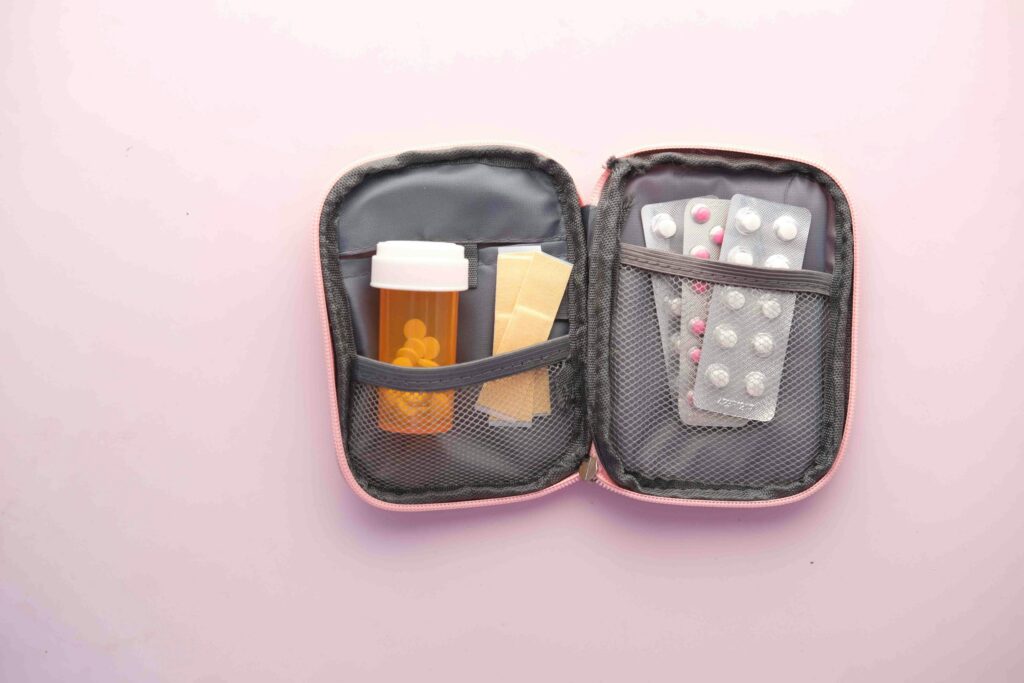
• Small first aid kit. A few plasters, painkillers, antihistamines, disinfectant wipes. That’s it.
• Tiny tube of sunscreen. I always forget it, and always regret it when I do.
• Lip balm with SPF. Especially on windy or sunny rides.
• Toothbrush and toothpaste tabs. Light, clean, and takes up zero space.
• Earplugs. Game-changer if you’re sleeping near traffic, snorers, or just need quiet.
• A few sheets of toilet paper or tissues. In a ziplock.
• Water filter or purification tabs. Only if I’m riding remote and can’t rely on tap water.
• Optional: tiny notebook and pen. If I know I’ll want to write things down.
That’s really it. No microfiber towel. No deodorant stick. No backup this or that. If it doesn’t solve a real problem, I leave it.
You’d be surprised how little you actually need once you’ve done a few trips. And how nice it is not digging through random extras every time you open your bag.
What I Cut From My Setup (And Why It’s Better Now)
Every bikepacking trip teaches you something. The first few taught me that I was carrying way too much. Stuff I thought I’d need. Stuff I convinced myself would make the trip more “comfortable.” But most of it stayed in the bag the entire time.
I used to bring a full-size towel. It took forever to dry and always smelled weird after day two. Now I dry off with a t-shirt or just air dry. Works fine.
I used to bring a tripod. Thought I’d shoot cool photos and document the journey properly. Never used it. Phone shots and memories are more than enough.
I brought a book once. A real one. Read five pages, then passed out every night before touching it again. Now I just listen to something on my phone if I need entertainment.
I packed spare clothes for camp. Thought I’d want to “feel clean” in the evenings. In reality, I just wanted to eat and sleep. Riding clothes worked fine the next morning.
All of it felt useful at the time. But once I started cutting, I realized how much of it was just extra weight and decisions I didn’t need. The simpler my kit got, the easier everything else became. Less to dig through. Less to worry about. Less to strap and re-strap every morning.
Now the rule is simple: if it didn’t get used last time, it doesn’t come next time. If it doesn’t earn its place, it stays home.
Final Checklist (Copy It, Pack It, Ride Light)
Here’s the full setup I bring on most trips. No extras. No maybes. Just what I’ve tested, used, and trust.
Clothing
• 1 merino t-shirt or jersey
• 1 pair of padded bibs or liners
• 1 pair of socks
• 1 lightweight shell jacket
• 1 buff (optional)
• 1 long-sleeve base layer
• 1 pair of long base layer pants
• 1 pair of light camp shoes or sandals (optional)
Sleep system
• 1 quilt or sleeping bag (season-dependent)
• 1 sleeping pad
• Clothes as pillow
• Liner (only if it’s a dirty trip)
• All packed into one drybag
Cook kit
• 1 small pot
• 1 long-handled spoon
• 1 small stove (alcohol or gas)
• 1 lighter
• Instant oats, couscous, snacks, coffee sachets
• Tiny sponge and soap (only if needed)
Tools and spares
• Multitool with chain breaker
• 2 tire levers
• 1 spare tube
• Mini pump
• Quick link
• Zip ties + tape
• Small rag
Electronics
• Smartphone
• Power bank (10–15k mAh)
• USB cable
• Front light
• Headlamp
• GPS or bike computer (optional)
Other essentials
• Mini first aid kit
• Sunscreen
• Lip balm
• Toothbrush + tabs
• Earplugs
• Toilet paper in a ziplock
• Tiny notebook and pen (optional)
• Water filter or tabs (if needed)
That’s the full list. If it’s not on here, I’ve probably carried it before and left it at home the next time. You don’t need much to ride far — just what works.
Lighter Gear, Better Ride
Every single thing you bring, you have to carry. Up hills. Through mud. Into your tent. In and out of your bags, every day. It all adds up.
Packing light isn’t about being hardcore. It’s about making space — for movement, for clarity, for the parts of the trip that actually matter. The gear should help you ride, not get in the way of it.
This is the setup that works for me. Yours might be different. But if you’re just starting out, I’d say: bring less than you think, and pay attention to what you actually use.
Then cut the rest.